Pony.ai unveils an autonomous electric truck for logistics fleets
Pony.ai and GAC Commercial Vehicle have introduced a fourth-generation Level 4 Robotruck, with mass production planned for late 2026; its cost and efficiency figures remain company-reported claims.
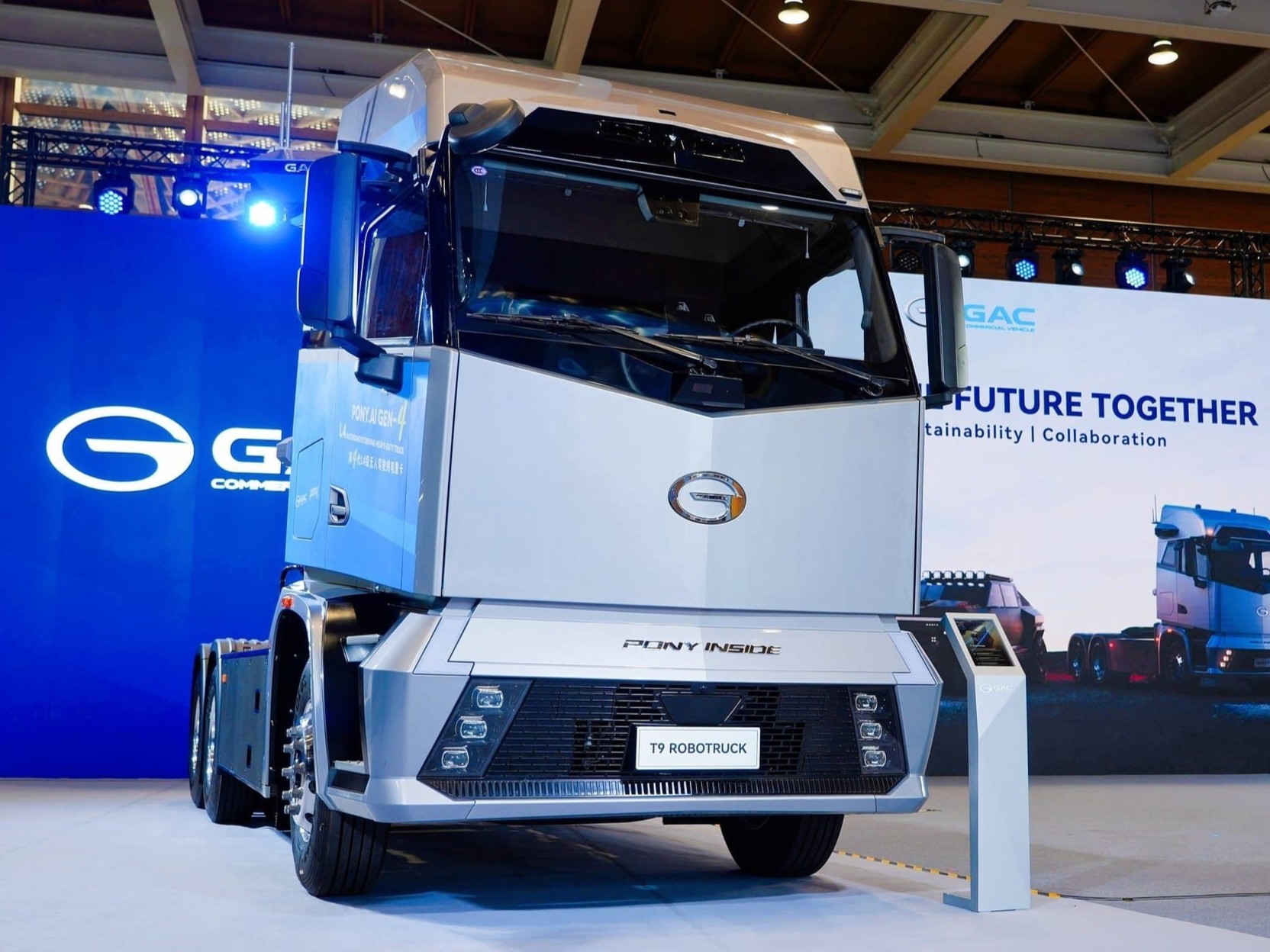
Pony.ai and GAC Commercial Vehicle have unveiled an autonomous battery-electric heavy truck for freight supply chains. Presented at IAA Transportation 2026, the vehicle is the fourth generation of Pony.ai's Robotruck platform and is built on GAC Commercial Vehicle's T9 battery-electric truck architecture.
Production plans and intended routes
The companies say mass production of the autonomous T9 is scheduled to begin later in 2026. Initial deployments are intended for long-haul freight, dedicated logistics corridors, and port transport. Pony.ai also says it plans to expand Robotruck operations into European and Middle Eastern markets over the following two years after the first domestic production run.
Sensors and hardware-cost claims
The automotive-grade autonomous-driving kit includes nine lidars, three millimetre-wave radars, and 13 cameras for 360-degree sensing. Pony.ai says the bill-of-materials cost of the kit has fallen 70 percent from the previous generation and projects a 30 percent reduction in transport operating cost per tonne-kilometre. These are company estimates and claims; the report does not cite an independent evaluation.
The company also says its control algorithms, combined with the T9 cab's 0.4 drag coefficient, reduce energy consumption by 10 percent compared with conventional haulage trucks. Real-world savings may vary with payload, weather, speed, and operating conditions.
Shared compute and safety redundancy
The fourth-generation Robotruck uses the same central domain controller as Pony.ai's seventh-generation robotaxis and runs the company's unified “Virtual Driver” software. It is integrated with GAC's drive-by-wire chassis, with hardware backups across steering, braking, power supply, computing, sensors, and communications.
According to the report, the partners moved from a strategic agreement signed on 16 April to production readiness in five months. Pony.ai has worked on autonomous trucking since 2018, but commercial success will still depend on reliable volume production, local regulatory approval, and safe performance in real freight operations.
Source: AI News