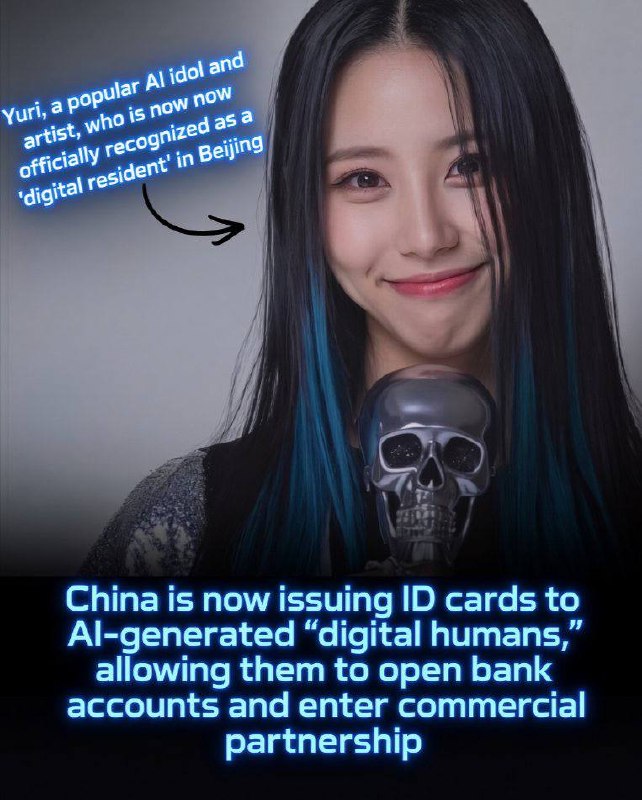
Reports say China is issuing digital identities to AI-generated personas
A new report says some AI-generated personas in China are receiving digital identities, raising questions about contracts, intellectual property, accountability and surveillance.
A newly published report says China is testing a system that gives official digital identities to some AI-generated “digital humans” and virtual personas. According to the account, such credentials could let them open digital-currency wallets, sign contracts and enter commercial partnerships.
A virtual persona named Yuri
The report identifies Yuri, a virtual idol and artist, as one of the first examples and says the persona has been recognized as a “digital resident” in Beijing. The reported credential includes details such as a name, date of birth, address and facial characteristics.
Potential benefits and risks
Supporters argue that clearer legal identification for virtual personas could help protect intellectual property and make the companies operating them more accountable. Critics, however, warn that the same infrastructure could extend state surveillance into digital identities.
The report also claims that China’s digital-human sector includes more than 1.3 million active businesses and has a market value above 0 billion. A separate claim says some companies are offering people as much as 0,000 to license their likenesses for AI-generated replicas.
The available material does not independently establish those figures or the precise legal scope of the credentials. They should therefore be treated as reported claims, not proof that AI systems have received full legal personhood. If expanded, the experiment could become an early test of how contracts, ownership, liability and privacy are handled when virtual personas participate in economic activity.